No items found.

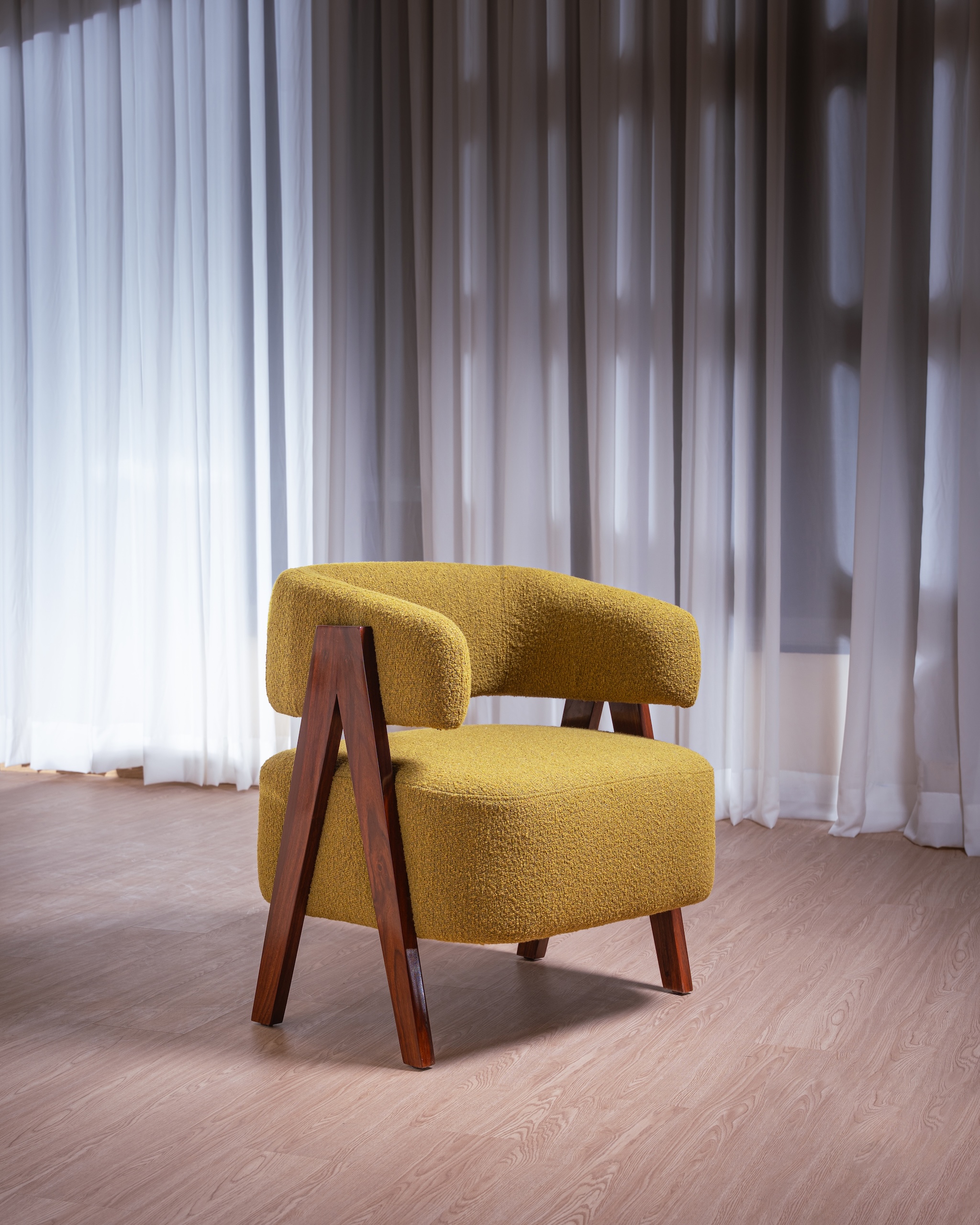
The Vico Armchair brings structure and softness into clear view. An exposed timber frame rises around a generous upholstered seat, supporting a curved backrest that wraps gently around the body. Rather than concealing its construction, Vico makes it part of its identity. Warm timber, tactile upholstery and carefully balanced geometry come together in a compact armchair with an architectural presence. Distinct in silhouette. Generous in comfort.
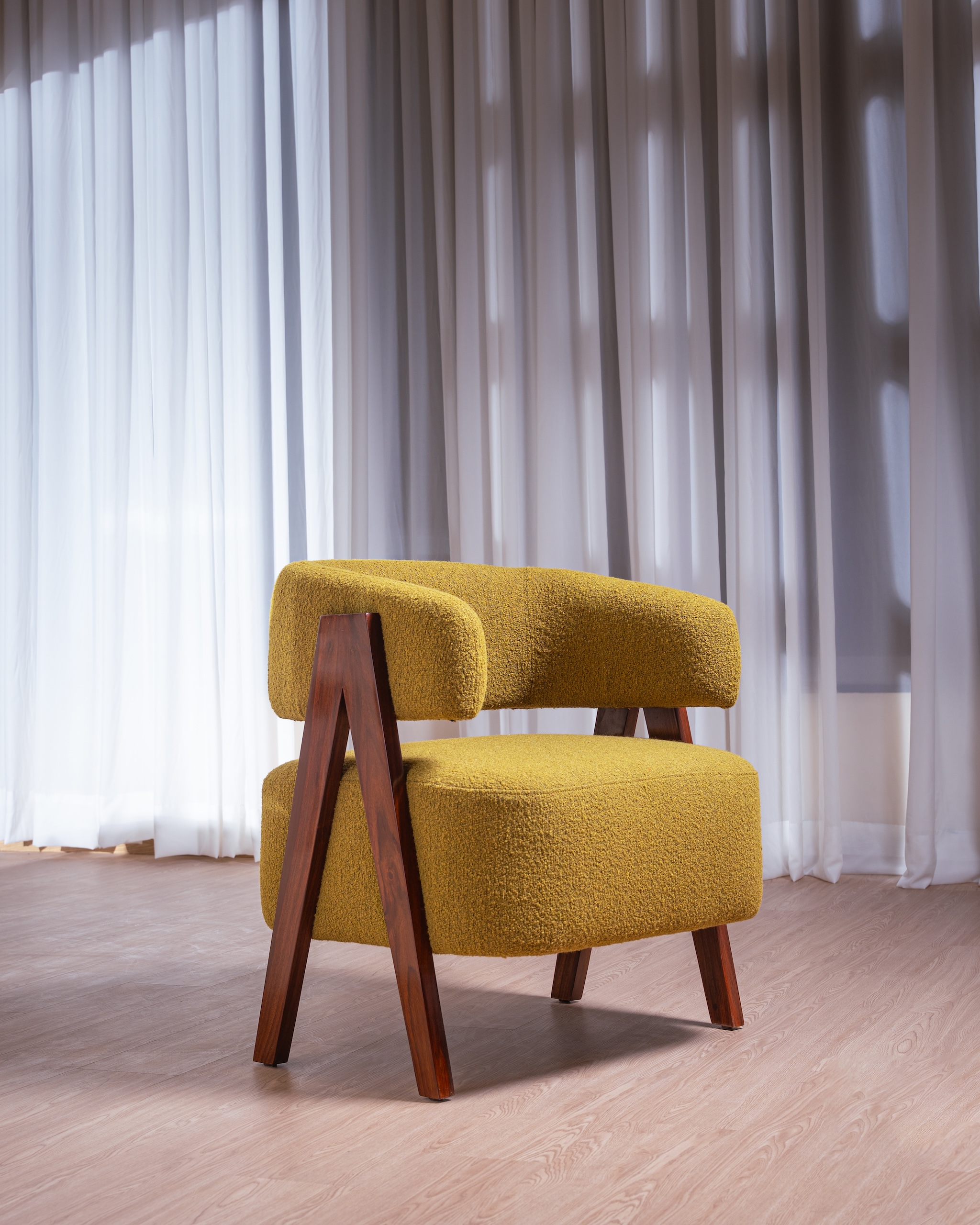
Vico begins with something furniture often tries to conceal: its structure.
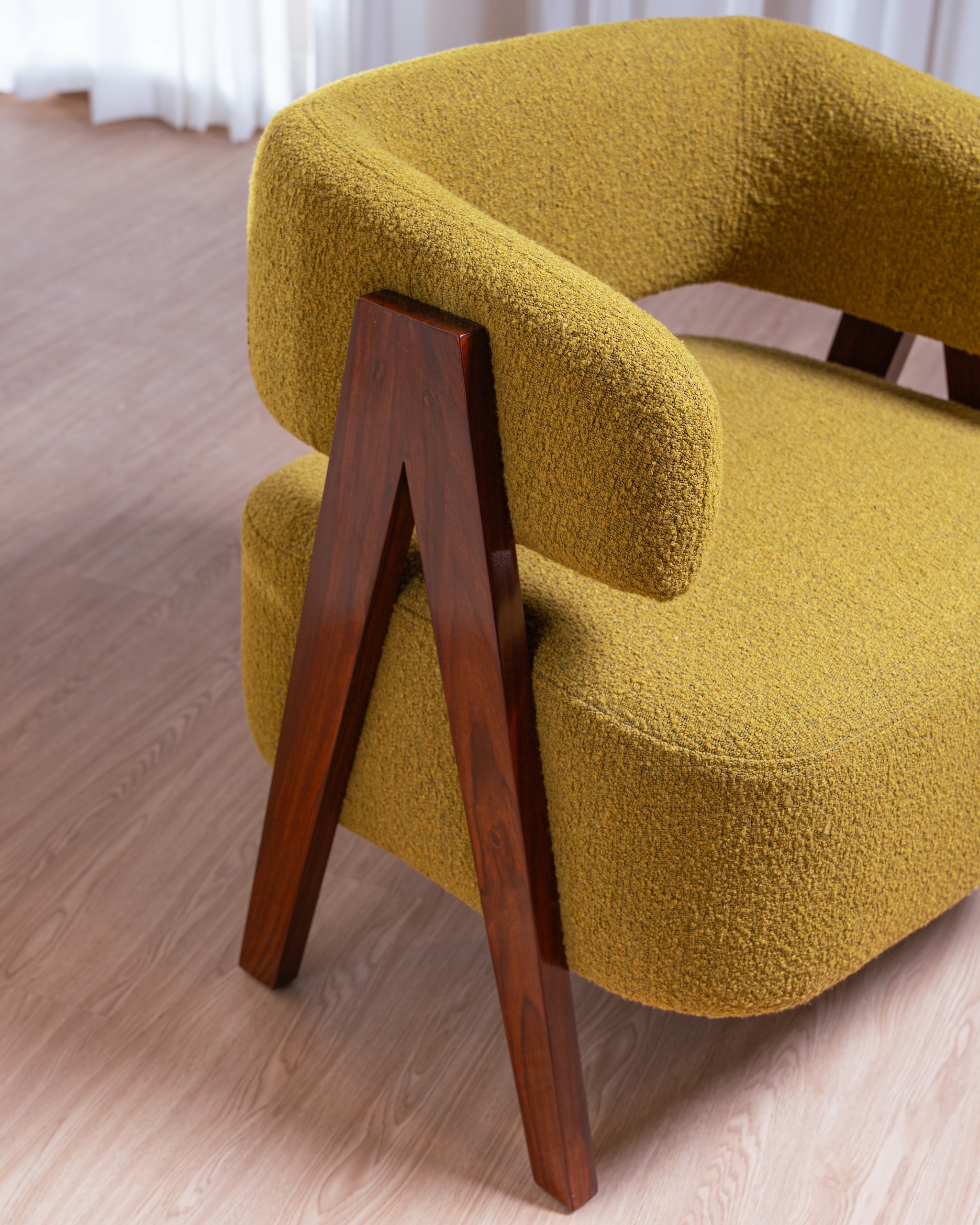
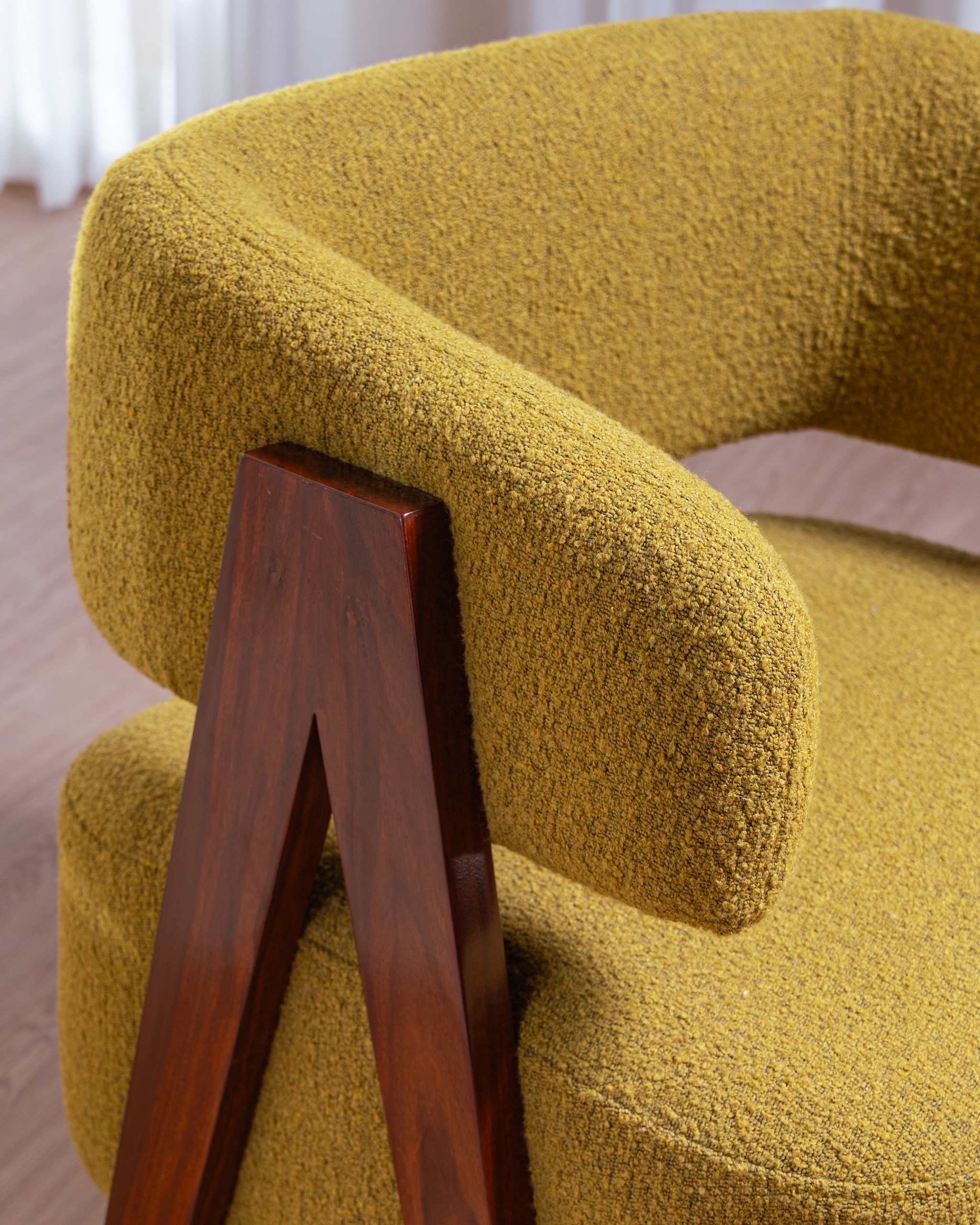
Two angled timber members rise from the floor and meet around the upholstered back, creating the chair's distinctive A-shaped profile. Instead of disappearing beneath fabric, this framework remains deliberately visible, giving Vico an almost architectural clarity.
Within it, the language changes.
A generous upholstered seat forms a soft horizontal volume, while the backrest curves around the sitter in a continuous embrace. The small opening between seat and back allows light to pass through, visually separating the two upholstered forms and making each appear lighter.
This relationship creates Vico's personality.
The timber is linear and disciplined.
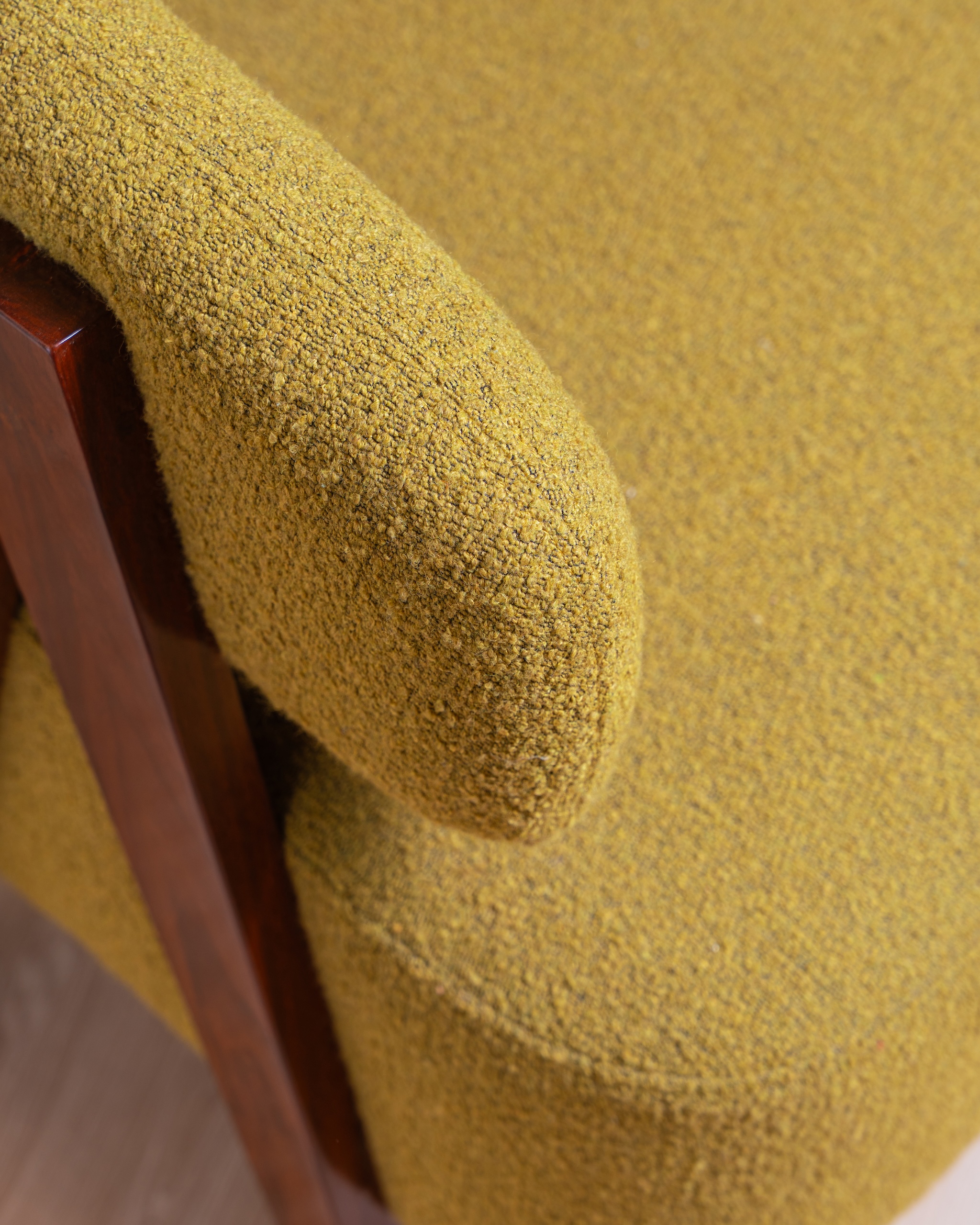
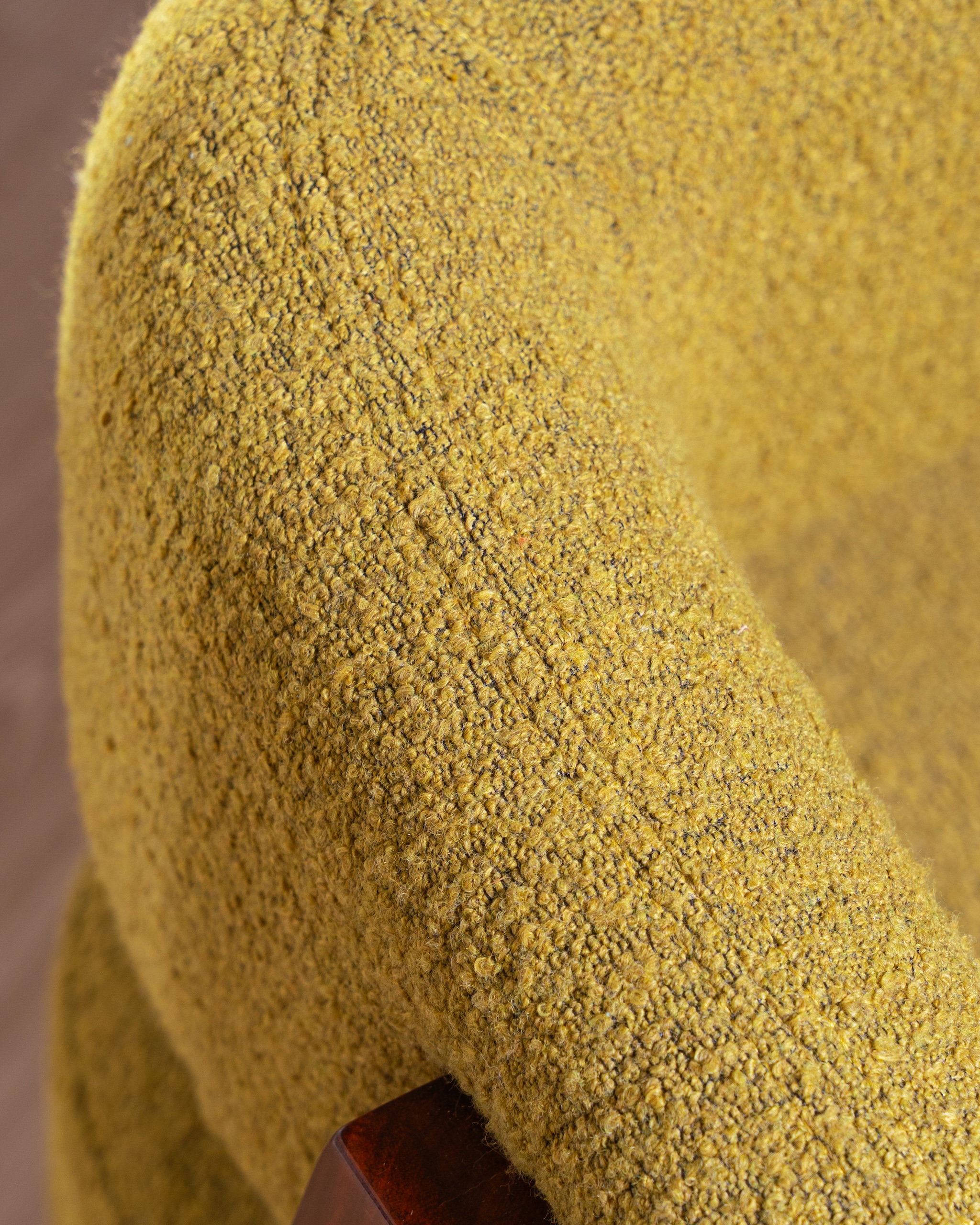
The upholstery is rounded and tactile.
The frame supports.
The cushions soften.
Neither material attempts to dominate the other.
From the front, Vico feels welcoming and composed. From the side, its exposed geometry reveals an entirely different character, turning the chair itself into a small study of structure.
Its construction isn't hidden behind the design. Its construction is the design.
Vico draws inspiration from the architectural thinking that shaped much of twentieth-century Italian design: the belief that clarity can be beautiful.
Instead of relying on ornament, architects and designers began allowing proportion, structure and material to define character. Timber could remain timber. A supporting element could be celebrated rather than concealed. Beauty could emerge simply from understanding how things meet, carry weight and occupy space.
Vico translates that thinking into a chair.
Its exposed timber members behave almost like the structural frame of a small building, while the upholstered volumes sit within them like softer inhabited spaces. The pronounced triangular geometry gives stability and rhythm; the curved back introduces warmth and human scale.
Even the space between its elements matters. Openings allow light through the chair, preventing its substantial upholstery from becoming visually heavy.
The result is a piece shaped by both geometry and humanity.
A structure made to be seen.
A softness made to be felt.
Vico finds harmony between the architecture that holds us and the comfort that makes us want to stay.